Can you get sick from being in the rain? Here’s what you should know

Learn how rain can affect your health
Getting caught in the rain doesn’t directly make you sick. It’s the viruses that spread through close contact, respiratory droplets, and contaminated surfaces that cause colds and flu.
People get sick during the rainy season because cold and wet conditions can lower body temperature and affect the body’s natural defenses. Spending more time indoors and in close contact with others can also increase the spread of viruses.
In the Philippines, the rainy season can bring more respiratory illnesses, including colds and flu caused by viruses like rhinoviruses and influenza viruses.
Simple precautions can help you stay healthy throughout the rainy season. To avoid catching these illnesses, here are some simple tips:
1. Stay clean and dry at all times
If you get caught in the rain, take a shower, change into dry clothes, and warm up as soon as possible.
2. Always bring rain gear
Keep an umbrella or raincoat handy, especially when heading out during the rainy season.
3. Take food supplements
Help support your body with CM-Glucan, which helps balance the immune system with proper diet and exercise. CM-Glucan can be found in Immunomax and produces more antibodies than Vitamin C.
Help keep your body strong during the rainy season or any weather with proper diet and exercise.
MAHALAGANG PAALALA: ANG IMMUNOMAX AT IMMUNOMAX FORTE AY HINDI GAMOT AT HINDI DAPAT GAMITING PANGGAMOT SA ANUMANG URI NG SAKIT.
ASC REFERENCE NO. I0004N090726I

Add these fruits that are packed with essential vitamins to your daily diet
Fruits are essential for a strong immune system because they are rich in vitamins, minerals, antioxidants, and other nutrients that help support the body’s natural defenses.
Adding fruits to your diet can make a big difference to your health. Here are some nutrient-rich options that you can easily find in groceries and supermarkets across the Philippines:
1. Papaya – A source of vitamin C and vitamin A, as well as other nutrients.
2. Mango – Provides vitamin C, vitamin A, and other beneficial nutrients.
3. Kalamansi (Calamansi) – A citrus fruit that provides vitamin C and is commonly used as a juice or flavoring.
4. Dalandan (Sour Orange) – A citrus fruit that provides vitamin C and other nutrients.
5. Kiwi – A nutrient-rich fruit and a good source of vitamin C.
6. Guyabano (Soursop) – Contains vitamin C and other nutrients.
7. Sampaloc (Tamarind) – Contains vitamin C and other nutrients.
8. Banana – Provides potassium, vitamin C, B vitamins, and fiber.
9. Pomelo – A citrus fruit that provides vitamin C and other nutrients.
10. Bayabas (Guava) – A nutrient-rich fruit and a good source of vitamin C and vitamin A.
You can enjoy these fruits in many ways—eat them as snacks, blend them into smoothies, mix them into yogurt or oatmeal, add them to salads, or enjoy them as fresh juice.
For additional immune support, CM-Glucan can also be a good addition to your diet. It helps balance the immune system with proper diet and exercise.
CM-Glucan is found in Immunomax.
MAHALAGANG PAALALA: ANG IMMUNOMAX AT IMMUNOMAX FORTE AY HINDI GAMOT AT HINDI DAPAT GAMITING PANGGAMOT SA ANUMANG URI NG SAKIT.
ASC REFERENCE NO. I0003N090726I

Learn what type of cough you might be experiencing
A cough isn’t always caused by an infection. Allergies can also trigger coughing when allergens irritate your airways.
An allergy-related cough is often dry and accompanied by sneezing, a runny or stuffy nose, and itchy eyes. Unlike infections, allergies typically don’t cause fever or body aches and may persist as long as you’re exposed to the trigger.
Common allergy triggers include:
1. Pollen – From plants and flowers.
2. Dust mites – Found in bedding and upholstery.
3. Pet dander – Tiny flakes from your pet’s skin.
4. Mold – Grows in damp and humid areas.
If you’re experiencing an allergy cough, over-the-counter medicines such as antihistamines, decongestants, saline sprays, and nasal steroid sprays may help manage symptoms. Keeping your surroundings clean can also reduce allergen exposure.
To help your body respond better to allergens, food supplements like CM-Glucan can help balance the immune system with proper diet and exercise. It helps the body produce more antibodies than Vitamin C. CM-Glucan can be found in Immunomax.
For persistent or severe symptoms, a doctor may recommend prescription treatment or allergy testing.
MAHALAGANG PAALALA: ANG IMMUNOMAX AT IMMUNOMAX FORTE AY HINDI GAMOT AT HINDI DAPAT GAMITING PANGGAMOT SA ANUMANG URI NG SAKIT.
ASC REFERENCE NO. I0005N090726I
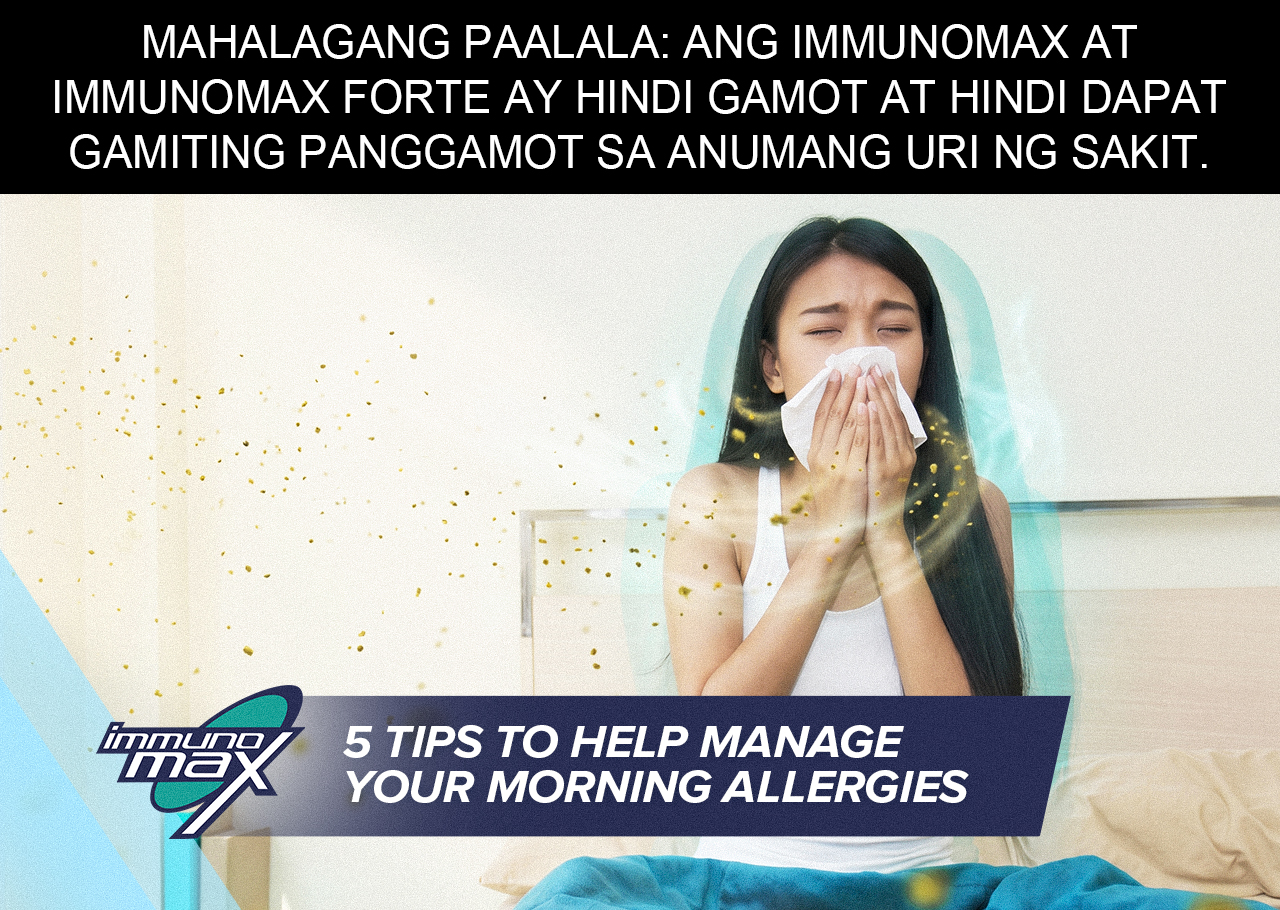
Wake up to more comfortable mornings with these simple daily habits
Allergies can happen at any time of the day, but symptoms like a stuffy nose, sneezing, itchy eyes, and a scratchy throat are usually worse in the morning due to allergen exposure throughout the night.
Your home can collect common allergy triggers like pollen, dust mites, pet dander, and mold. Open windows and pets can bring allergens inside, while rainy weather can cause mold to grow in carpets and bedding. Dust mites are also commonly found in mattresses, pillows, and bedding, which can contribute to morning allergy symptoms.
To help minimize morning symptoms, it’s important to keep your home safe from allergens all the time, especially your bedroom.
1. Keep your windows closed
Close your windows, especially when pollen levels are high, to help keep allergens out.
2. Keep your space clean
Wash your bedding regularly and dust your room to prevent dust and mold from building up.
3. Control indoor humidity
Use a dehumidifier to help reduce moisture that can encourage dust mites and mold growth.
4. Wash up before bedtime
Wash off pollen and other allergens from your skin and hair before bedtime. Change into clean clothes to avoid bringing allergens into your bed.
5. Support your immune system (with proper diet and exercise)
For your body to better respond to morning allergies, help support your immune system with CM-Glucan. CM-Glucan helps balance the immune system by producing more antibodies than Vitamin C. CM-Glucan can be found in Immunomax. Always pair it with a proper diet and regular exercise.
MAHALAGANG PAALALA: ANG IMMUNOMAX AT IMMUNOMAX FORTE AY HINDI GAMOT AT HINDI DAPAT GAMITING PANGGAMOT SA ANUMANG URI NG SAKIT.
ASC REFERENCE NO. I0002N090726I

Prepare your immune system this rainy season to avoid these allergies
What are environmental allergies?
Environmental allergies occur when your immune system overreacts to harmless substances in your surroundings, known as allergens.
During the changing weather, allergens become more common and may trigger the following allergies:
1. Allergic Rhinitis
It is caused by allergens such as pollen, mold, and dust mites, it can lead to sneezing, a runny nose, and nasal congestion.
2. Pollen Allergy
Seasonal changes can bring more pollen into the air, making allergies more common. This may cause sneezing, a runny nose, and itchy eyes.
3. Mold Allergy
Mold grows well in damp and humid places, making it more common during the rainy season. Breathing in mold can trigger allergies and cause sneezing, a runny nose, coughing, and other allergy symptoms.
4. Eczema (Atopic Dermatitis)
Changes in temperature and humidity can trigger flare-ups, causing dry, itchy, red, and irritated skin. Keeping the skin clean and moisturized may help reduce irritation.
5. Allergic Asthma
Weather changes and airborne allergens can trigger asthma symptoms in susceptible individuals. This may cause coughing, wheezing, chest tightness, and shortness of breath.
A balanced immune system can help your body better respond to common environmental allergies. Help support your immune system with CM-Glucan with proper diet and exercise. CM-Glucan produces more antibodies than Vitamin C. CM-Glucan is also a 100x more absorbable than Standard Beta Glucan. CM-Glucan is a natural immunomodulator that can be found in Immunomax. Together with a proper diet, regular exercise, and good daily habits, these can help help keep your body balanced in any weather, all year round.
MAHALAGANG PAALALA: ANG IMMUNOMAX AT IMMUNOMAX FORTE AY HINDI GAMOT AT HINDI DAPAT GAMITING PANGGAMOT SA ANUMANG URI NG SAKIT.
ASC REFERENCE NO. I0001N072126I

Avoid illnesses with these rainy season safety tips
In the Philippines, the La Niña season often brings heavy traffic and limited public transportation during heavy rains. Longer travel times, crowded public transport, and frequent exposure to the rain can increase health risks for commuters.
Taking these simple precautions can help you stay strong throughout the season.
1. Plan your route
To get to your destination safely, always check weather reports before leaving to find the safest route for your commute. This can help you avoid flooded roads, heavy traffic, and other weather-related delays, making your trip safer and less stressful.
2. Ready your rain coat, boots, and umbrella
No matter how short or long your commute is, it’s important to bring rain gear like an umbrella or raincoat to stay dry. Sudden downpours can happen at any time, so it’s best to be prepared before leaving home. Staying dry and changing out of wet clothes as soon as possible can help reduce your risk of getting sick during the rainy season.
3. Maintain good hygiene
Always wash your hands thoroughly with clean water and avoid contact with floodwater as much as possible, as it may be contaminated with dirt, bacteria, and other harmful germs. If you accidentally come into contact with floodwater, wash your hands and any exposed skin immediately with clean water and soap.
4. Maintain proper hydration
Drink plenty of water and eat fruits with high water content to prevent dehydration especially when you’re on the road. Staying hydrated helps your body function properly and keeps you feeling refreshed throughout your commute.
5. Help balance your immune system with CM-Glucan
To help fight illnesses this rainy season, food supplements like CM-Glucan can help balance the immune system with proper diet and exercise. It helps the body produce more antibodies than Vitamin C and is 100x more soluble than Standard Beta Glucan. CM-Glucan can be found in Immunomax.
MAHALAGANG PAALALA: ANG IMMUNOMAX AT IMMUNOMAX FORTE AY HINDI GAMOT AT HINDI DAPAT GAMITING PANGGAMOT SA ANUMANG URI NG SAKIT.
ASC REFERENCE NO. I0008N072026I

Here’s a guide on how to help them fight allergies this season
Rainy season also means allergy season, especially for children. The damp weather can increase mold, dust, and other allergens that may trigger sneezing, coughing, and runny noses. That’s why it’s important to help strengthen your kids’ immunity during this time (with proper diet and exercise).
Here are some child immune system tips to help prevent them from getting sick this rainy season.
1. Clean Indoors
Staying indoors doesn’t always mean kids are safe from allergens. Mold and dust can build up inside the house during the rainy season. Use an air purifier or dehumidifier to reduce moisture and help keep allergens away.
2. Proper hand washing
Make sure your kids wash their hands regularly, especially before eating and after using shared equipment at school. Clean hands help reduce the spread of germs during the rainy season.
3. Nutritious and balanced meals
Pack well-balanced meals for your kids to bring to school. Nutritious food helps keep their bodies strong and supports their immune system, so they’re better prepared to fight common illnesses during the rainy season.
4. Protective rain gear for outdoors
If your kids need to go outside at school, make sure they wear a raincoat and proper shoes. This helps keep them dry and safe from the rain.
5. Food supplements
Providing your kids with supplements can be helpful for their immune system. It’s an easy way to support them during the rainy season. Immunomax is a food supplement made with CM-Glucan. CM-Glucan is a natural immunomodulator that helps balance the immune system with a proper diet and regular exercise. CM-Glucan produces more antibodies than vitamin C and is 100x more absorbable than Standard Beta Glucan.
MAHALAGANG PAALALA: ANG IMMUNOMAX SYRUP AT IMMUNOMAX FORTE SYRUP AY HINDI GAMOT AT HINDI DAPAT GAMITING PANGGAMOT SA ANUMANG URI NG SAKIT.
ASC REFERENCE NO. I0009N072026I

Knowing the cause of your symptoms can help you choose the right care and the right immunity supplement
Sneezing, congestion, runny nose, facial pressure–many people experience these symptoms and assume they’re all caused by the same condition. But sometimes, what seems like a simple allergy could actually be sinusitis.
Because the symptoms can overlap, allergic rhinitis and sinusitis are often confused with each other. Knowing the difference can help you better manage symptoms, avoid triggers, and choose the right treatment and preventive habits.
What Is Allergic Rhinitis?
Allergic rhinitis happens when the lining of the nose becomes inflamed due to allergens.
Common triggers include:
- Dust mites
- Pollen
- Pet dander
- Mold
- Smoke or strong scents
When exposed to these triggers, the immune system overreacts and releases chemicals that cause allergy symptoms.
Common signs of allergic rhinitis include:
- Sneezing
- Runny or stuffy nose
- Itchy eyes, nose, or throat
- Watery eyes
- Postnasal drip
Symptoms are usually recurring and can worsen during certain seasons or after exposure to allergens.
What Is Sinusitis?
Sinusitis is the inflammation or infection of the sinuses, the air-filled spaces around the nose and cheeks.
Unlike allergic rhinitis, sinusitis is often linked to viral or bacterial infections, although allergies can sometimes contribute to it.
Common symptoms include:
- Facial pressure or pain
- Thick yellow or green mucus
- Headache
- Fever
- Fatigue
- Nasal congestion
Some people may also experience reduced sense of smell or pain around the eyes and forehead.
The Key Difference
While both conditions can cause congestion and discomfort, they affect different parts of the respiratory system.
Allergic rhinitis mainly affects the nasal lining and is commonly triggered by allergens.
Sinusitis affects the sinuses and is more commonly associated with infection or inflammation.
In simple terms:
- Sneezing and itchiness are more common in rhinitis
- Facial pressure and thick mucus are more common in sinusitis
- Understanding the difference can help you know when to avoid allergens, when to rest and recover, and when to consult a doctor.
Supporting Prevention and Immunity
While treatment depends on the condition, healthy habits can help support overall respiratory wellness.
Simple preventive measures include:
- Eating a balanced diet
- Exercising regularly
- Getting enough sleep
- Staying hydrated
- Keeping your environment clean and well-ventilated
- Some people also include food supplements like Vitamin C and Beta-Glucan as part of their daily wellness routine.
CM-Glucan
CM-Glucan is a natural immunomodulator that helps support a balanced immune response with proper diet and exercise.
Immunomax is a food supplement made with pure CM-Glucan, that produces more antibodies than Vitamin C and is 100x more absorbable than Standard Beta-Glucan.
Understanding your symptoms is the first step toward managing them better. If your symptoms persist or keep returning, consult your doctor for guidance.
MAHALAGANG PAALALA: Ang Immunomax at Immunomax Forte ay hindi gamot at hindi dapat gamiting panggamot sa anumang uri ng sakit.
ASC Reference No. I0030N060526I

Your open-plan office could be a problem. Here’s how CM-Glucan can help you
Many people spend most of their day indoors — especially at work. From morning meetings to long hours in front of a computer, office workers can spend more time inside buildings than outside of them. But sometimes, the building itself could be affecting your health. If you often feel tired, develop headaches, experience nasal congestion, coughing, dry throat, or irritation that seems to improve once you leave the office, your workplace environment may be part of the problem. This is sometimes linked to what experts call Sick Building Syndrome.
What Is Sick Building Syndrome?
Sick Building Syndrome refers to a condition where people experience symptoms that appear connected to time spent inside a specific building.
Common symptoms may include:
- Headaches
- Fatigue or difficulty concentrating
- Dry eyes, nose, or throat
- Coughing or sneezing
- General upper respiratory discomfort
One of the biggest signs is that symptoms often improve after leaving the area. While it’s not always easy to identify one exact cause, poor indoor air quality is often a major factor.
Possible Triggers Inside the Office
Modern offices, especially enclosed or crowded spaces, can sometimes trap allergens and irritants indoors.
Some common workplace triggers include:
- Poor Ventilation
Air that constantly circulates indoors without enough fresh airflow may allow dust, irritants, and pollutants to build up. - Dust and Mold
Air-conditioning units, carpets, office furniture, and damp areas can collect dust and mold over time, especially when cleaning and maintenance are inconsistent. - Crowded Indoor Spaces
The more crowded an office becomes, the easier it is for germs and airborne irritants to spread from person to person. Long hours indoors can increase repeated exposure throughout the day.
What Can You Do?
While you may not be able to control your entire office environment, small changes can still help.
- Improve Ventilation
If possible, open windows occasionally or improve airflow in your workspace. Some people also use air purifiers to help reduce indoor irritants. - Keep Your Area Clean
Wipe down desks, keyboards, and frequently touched surfaces regularly. Keeping your workspace clean may help reduce dust and germs. - Report Recurring Problems
If multiple employees experience similar symptoms, inform your manager or building administration. Proper maintenance, ventilation checks, and deep cleaning may be necessary. - Support Your Immune System
Daily exposure to crowded indoor spaces can put added stress on the body. That’s why many people also focus on supporting their immune system through proper sleep, hydration, exercise, and balanced nutrition. Some also include food supplements like Vitamin C as part of their routine. Food supplements with CM-Glucan, such as Immunomax, are designed to help support immune balance with proper diet and exercise. CM-Glucan is a natural immunomodulator, that helps maintain a balanced immune system with proper diet and exercise, and produces more antibodies than Vitamin C.
Your workplace should support productivity — not make you feel unwell. If you frequently experience symptoms indoors, it may be time to look more closely at your environment and consider ways to better support your overall wellness.
MAHALAGANG PAALALA: Ang Immunomax at Immunomax Forte ay hindi gamot at hindi dapat gamiting panggamot sa anumang uri ng sakit.
ASC Reference No. I0028N060526I

Here are some tips on how to be a responsible parent even when you’re feeling under the weather
No parent wants to get sick — especially when there are meals to prepare, kids to care for, and responsibilities waiting at home. But the truth is, everyone eventually gets sick, even the busiest moms and dads.
Whether it’s a cough, colds, flu, or simple exhaustion, getting sick can make parenting feel even more challenging. The good news is that with a few practical steps, you can help protect your family while still taking care of yourself. Here are some simple tips that may help the whole household when a parent is feeling under the weather.
Take Immediate Action
When you start feeling symptoms, act early to help reduce the spread of illness at home. Simple habits can already make a big difference:
- Wear a mask when around family members
- Wash your hands regularly
- Disinfect frequently touched surfaces like doorknobs, gadgets, tables, and remote controls
- Avoid sharing utensils, towels, or drinking glasses
Power Through the Basics
When you’re sick, conserving energy matters. Instead of trying to maintain your normal routine, focus on essentials and simplify tasks where possible.
Prepare easy but nutritious meals like soup, fruits, eggs, oatmeal, or simple rice meals. Keep hydration a priority for both you and your children. You can also switch to low-effort activities that still keep kids occupied, such as:
- Coloring or drawing
- Watching educational shows
- Reading storybooks together
- Quiet indoor games
Remember: resting is also part of recovery.
Make It a Teaching Moment
If your children are old enough, explain the situation calmly and honestly.
Teach them why handwashing, covering coughs, and giving someone space when they’re sick are important habits. This can help children better understand hygiene and empathy at an early age. You may also need to explain why hugs, kisses, or close contact may need to be limited temporarily until you recover.
Don’t Be Afraid to Ask for Help
Parenting while sick can be overwhelming, especially if symptoms worsen. If possible, call for backup from trusted family members, friends, or babysitters who can help with meals, errands, or childcare while you recover.
Accepting help doesn’t make you less responsible — it helps ensure both you and your children are properly cared for.
Practice Preventive Habits Daily
Good health habits are easier to maintain than recovery from illness.
Proper diet, exercise, hydration, and sleep all help support immune function for both adults and children. Some families also choose to include immunity supplements like Vitamin C as part of their daily wellness routine.
Food supplements with CM-Glucan, such as Immunomax Syrup for Kids and Immunomax Forte for Adults, were made to help support immune balance as part of a healthy lifestyle (with proper diet and exercise).
Parents don’t have to be perfect — they just have to be prepared. Taking care of yourself is also part of taking care of your family.
MAHALAGANG PAALALA: Ang Immunomax at Immunomax Forte ay hindi gamot at hindi dapat gamiting panggamot sa anumang uri ng sakit.
ASC Reference No. I0029N060526I