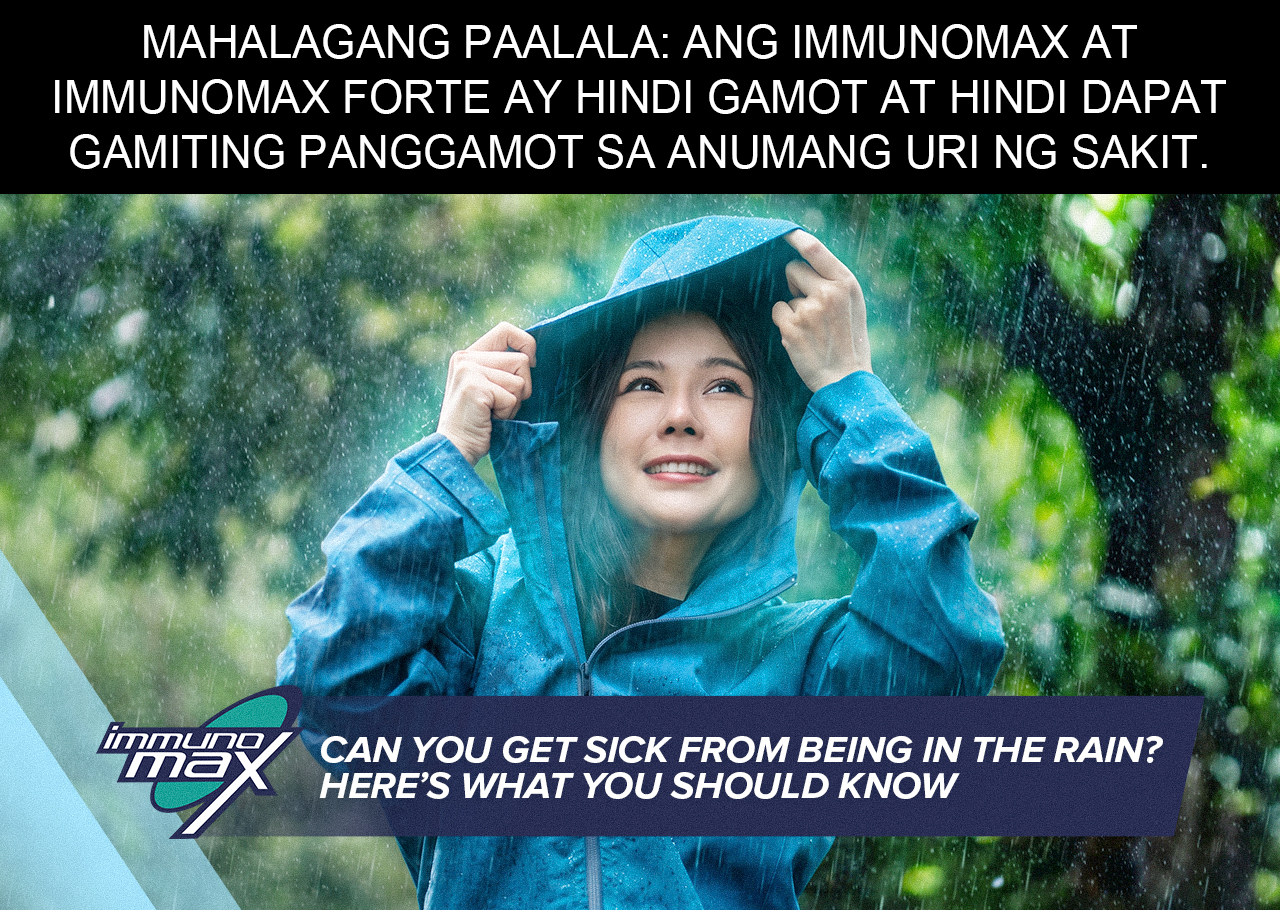
Can you get sick from being in the rain? Here’s what you should know
Published: 13:53 PM, September 21, 2026
Share:
Learn how rain can affect your health
Getting caught in the rain doesn’t directly make you sick. It’s the viruses that spread through close contact, respiratory droplets, and contaminated surfaces that cause colds and flu.
People get sick during the rainy season because cold and wet conditions can lower body temperature and affect the body’s natural defenses. Spending more time indoors and in close contact with others can also increase the spread of viruses.
In the Philippines, the rainy season can bring more respiratory illnesses, including colds and flu caused by viruses like rhinoviruses and influenza viruses.
Simple precautions can help you stay healthy throughout the rainy season. To avoid catching these illnesses, here are some simple tips:
1. Stay clean and dry at all times If you get caught in the rain, take a shower, change into dry clothes, and warm up as soon as possible.
2. Always bring rain gear Keep an umbrella or raincoat handy, especially when heading out during the rainy season.
3. Take food supplements Help support your body with CM-Glucan, which helps balance the immune system with proper diet and exercise. CM-Glucan can be found in Immunomax and produces more antibodies than Vitamin C.
Help keep your body strong during the rainy season or any weather with proper diet and exercise.
MAHALAGANG PAALALA: ANG IMMUNOMAX AT IMMUNOMAX FORTE AY HINDI GAMOT AT HINDI DAPAT GAMITING PANGGAMOT SA ANUMANG URI NG SAKIT.
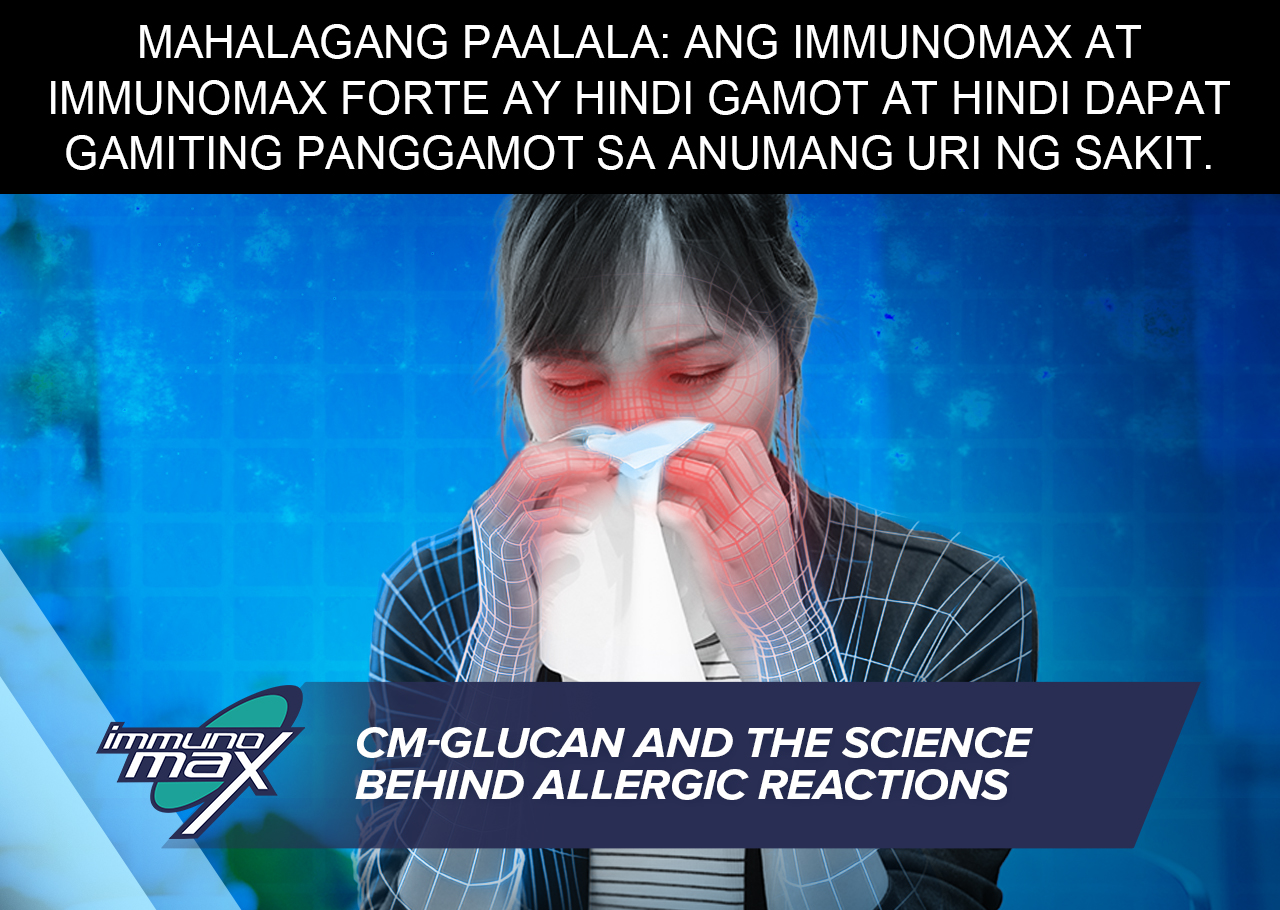
From pollen to food triggers, CM-Glucan in Immunomax helps support immune balance to reduce exaggerated responses. For many people, allergies are a regular part of life. A walk outside during pollen season, contact with dust, or eating certain foods can trigger sneezing, itching, or skin irritation.
What makes allergies a little unusual is that they are often caused by substances that are relatively harmless. Pollen, pet dander, and common foods don’t normally pose a danger to the body. The problem isn’t always the substance itself, but how the immune system reacts. Allergic reactions happen when the immune system becomes imbalanced and overreacts to a harmless substance as if it were a serious threat.
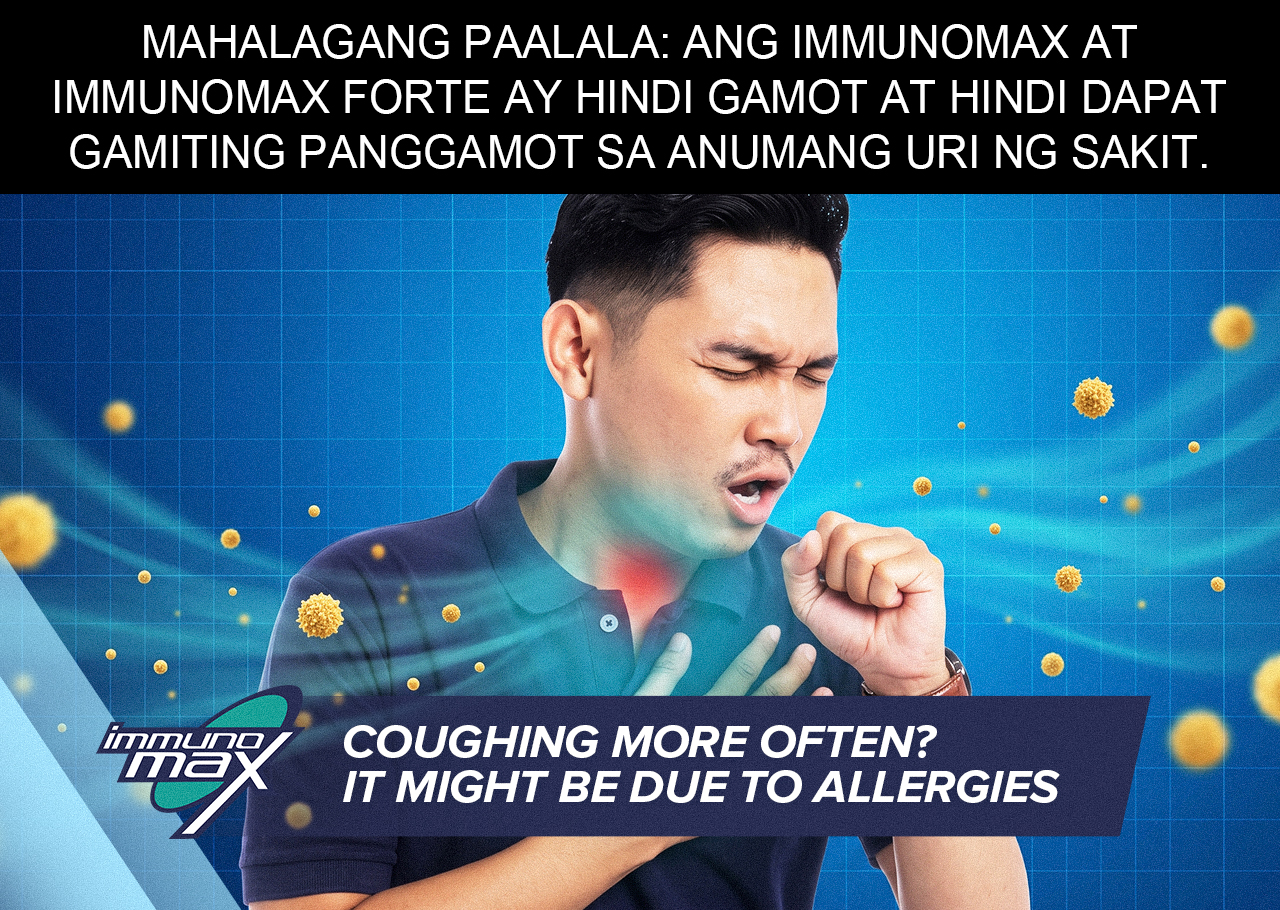
Learn what type of cough you might be experiencing
A cough isn’t always caused by an infection. Allergies can also trigger coughing when allergens irritate your airways.
An allergy-related cough is often dry and accompanied by sneezing, a runny or stuffy nose, and itchy eyes. Unlike infections, allergies typically don’t cause fever or body aches and may persist as long as you’re exposed to the trigger.