Your Home Could Be Triggering Your Allergies. Here’s How CM-Glucan Can Help You
Published: 14:02 PM, June 25, 2026
Share:
Here are some of the most common allergens in your home, and how a food supplement can help manage them
When people think about allergies, they often blame the outdoors: pollen, pollution, or weather. But sometimes, the real trigger could be much closer than you think: your own home. Many common allergy triggers are found indoors and can easily build up over time without you noticing. If you frequently experience sneezing, itchy eyes, coughing, congestion, or asthma flare-ups at home, identifying possible triggers is an important first step toward prevention and better management.
Here are some of the most common household allergens and what you can do about them.
Dust Mites Dust mites are tiny organisms that thrive in fabrics and warm environments. They’re commonly found in beds, pillows, mattresses, curtains, and upholstered furniture. Because they’re too small to see, many people don’t realize they’re constantly exposed to them while sleeping or relaxing at home. To help reduce dust mites:
Wash bedsheets and pillowcases regularly
Vacuum carpets and fabric surfaces often
Use protective covers for pillows and mattresses
Reduce clutter that collects dust
Pet Hair and Dander Even the most well-kept pets can trigger allergies. Pet dander, tiny flakes of skin shed by cats and dogs, can spread through the air and stick to furniture, clothes, and fabrics. Pet hair can also carry dust and allergens around the home. To help manage exposure:
Bathe and groom pets regularly
Clean floors and furniture frequently
Keep pets out of bedrooms or personal sleeping areas
Improve airflow inside the home
Mold Mold grows in damp, humid, and poorly ventilated spaces like bathrooms, kitchens, laundry areas, and even air-conditioning units. Exposure to mold can trigger sneezing, coughing, congestion, and breathing problems, especially for people with asthma or allergic rhinitis. To help prevent mold buildup:
Fix leaks immediately
Improve ventilation in humid areas
Keep surfaces dry and clean
Open windows whenever possible for better airflow
Air Irritants Not all allergy triggers are visible. Smoke, strong fragrances, dust from cleaning products, and harsh chemicals can irritate the airways and trigger allergic reactions. Simple ways to reduce exposure include:
Avoid smoking indoors
Use milder, unscented cleaning products
Improve ventilation when cleaning
Let fresh air circulate regularly
Supporting Your Immune Balance While avoiding allergens is important, supporting your immune system also plays a role in allergy management. Allergies happen when the immune system overreacts to normally harmless substances. Some people choose to add immunity supplements to their daily routine as part of overall allergy management. Supplements made with CM-Glucan, are designed to help balance your immune system (with proper diet and exercise). CM-Glucan can be found in Immunomax.
Your home should be a place where you can rest comfortably, not where allergy symptoms constantly return. Follow these tips to safeguard your home and ask your primary care physician if CM-Glucan can be added to your daily allergy management routine.
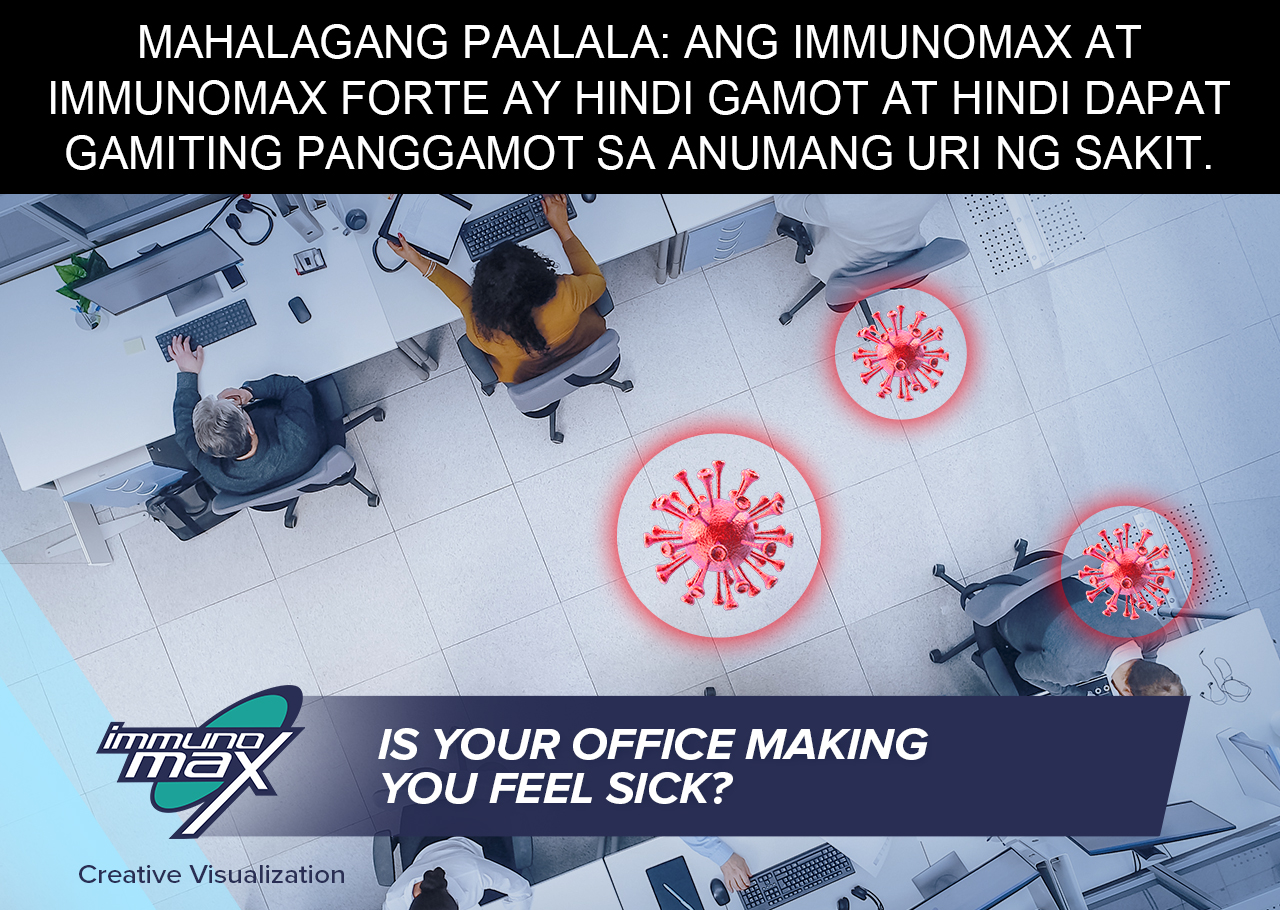
MAHALAGANG PAALALA: Ang Immunomax at Immunomax Forte ay hindi gamot at hindi dapat gamiting panggamot sa anumang uri ng sakit.
Your open-plan office could be a problem. Here’s how CM-Glucan can help you
Many people spend most of their day indoors — especially at work. From morning meetings to long hours in front of a computer, office workers can spend more time inside buildings than outside of them. But sometimes, the building itself could be affecting your health. If you often feel tired, develop headaches, experience nasal congestion, coughing, dry throat, or irritation that seems to improve once you leave the office, your workplace environment may be part of the problem. This is sometimes linked to what experts call Sick Building Syndrome.
The past two years have been eventful which led into many changes in our society, especially in the workforce. With many companies permanently adapting the hybrid setup where there is a balance between working onsite and remotely, such major change would also require major adjustments from many employees.